
2011
Camps
Theme: Mission to Mars
The Mission to Mars camp explores the computer science that goes into a mission to Mars. Every year we explore different computer science elements. The elements we will explore this year are:
- Programming Languages
- Image Manipulation
- Artificial Intelligence
- Robotics
Each day builds on the previous day. Programming to graphics, then AI to robotics. On day one everyone will learn how to program a computer. On day two programming knowledge will be applied to process graphic images. Processing graphic images is currently a large focus in exploring planets. Robots do this as their walk about Mars. Satelites do this as theyr circle Mars. After this we will learn about Artificial Intelligence and get to interact with an application program that permits the student to program a brain. Once this has been mastered, day four will be focused on programming robots. The skills they learned from the previous days will all be focused here as the participant programs the brains of real robots.
The last day of the camp is devoted to the BBQ and Competition. Each Competition Team will be given a robot to program and three events that they will compete in. The events will be a surprise and announced on the Thursday. They will have Thursday afternoon and Friday morning to prepare. Points will be tallied and the best teams will receive 1st, 2nd and 3rd prizes.
A tour will be organized to view the robotics labs at McGill University. We will also have the option to attend the Game camp tour.
Theme: Game Guru
The Games Programming Guru camp exposes students to the world of computer graphics as it relates to the media industry, which includes the following areas: movies, animation and video games. The camp’s focus is on video games and 3D modeling. Students will progress through all the stages a real games designer advances through when developing their own computer game. Students will learn the following things:
- A programming language
- How to do 3D Modeling
- Adding intelligence to games
- Simulating physics in games
Day 1 and 2 of the camp are used as building blocks for the remaining days. During day one the student learns how to program a computer using the Java programming language. On day two they learn how to do 3D modeling using a modeling application program. Days 3 and 4 are used to add features and capabilities to the algorithms they developed during day 1 and 2. Day 3’s capability advancement is artificial intelligent tricks that will make their algorithms more clever. In day 4 they will make their programs adaptable to physical constraints. Making games seamlessly intelligent andbehave has if gravity and projectiles actually exist in the computer is a challenging and fun problem.
The last day of the camp is devoted to the BBQ and Competition. Each Competition Team will be asked to construct a player program that will reside in a multi-player game. Each of their automated-programmed players will compete with the other teams to see who is more intelligent and which can interact with physics better.
They will have Thursday afternoon and Friday morning to prepare. Points will be tallied and the best teams will receive 1st, 2nd and 3rd prizes.
A tour will be organized to view the an industry grade gaming company. Last year our tour was with EA Games Montreal. We will also have the option to attend the Mars tour.
Theme: Medical Computing
The Medical Computing camp exposes students to the influences that computers have played in the medical community. Specifically this camp will explore viruses and the methods by which computers can help in identifying and destroying them. In addition to learning about viruses, the camp will introduce the students to medical robotics and genetics. Tours of McGill’s robotics and compu-genetics laboratories will also be provided.
As with all our camps, each day builds on the previous day. Day 1 gives the student an introduction to programming and introduces them to the virus software environment that will make up the focus of their competition, on day 5. The second day of the camp focuses on learning about genetics and how they relate to virus expression. During their lab time they will get additional practice in programming. Day 3 exposes the students to medical robotics together with a tour of the robotics department. Day 4 directly prepares them for the competition on day 5. Day four’s focus is on algorithmic strategies in identifying and destroying viruses.
The last day of the camp is devoted to the BBQ, competition and awards ceremony. The students will have all Thursday afternoon and Friday morning to get ready for the competition. Just before the competition begins there is a BBQ lunch where parents and teachers can join with the students. After the lunch the competition begins in ernest. Students will have to write software to identify and destroy viruses without killing their patient. Students will compete in their Research Team. A Research Team is composed of 3 to 5 students. The day ends with the camp’s award ceremony where students receive certificates and win prizes.
Theme: Climate Modeler Camp
The Climate Modeler Camp presents compelling visual evidence that the planet’s climate has already begun to change. Students will also get hands-on experience learning to predict changes in the global climate just as climate scientists do. In particular, students will design scientific questions, examine global data and evaluate hypotheses while using a research-grade U.S. National Aeronautics and Space Administration (NASA) global climate model as they learn about the greenhouse effect, natural factors shaping global climate, and human-caused global climate change.
By undertaking the work of climate scientists, students will learn about scientific methods common to Earth scientists, gain process skills in creating their own experiments, and learn to program in JavaScript to colorfully and visually display how the planet may look in 100 years. Students will learn the following things:
- How to use a research grade NASA global climate model (Columbia University’s Educational Global Climate Model or EdGCM)
- How to use Javascript and mapping software to display changes to the planet’s climate
- Basic Earth science concepts which impact global climate
- Criteria for examining the strength of anthropogenic climate change science
Each day will build off each other in teaching students basic Earth science, how to use EdGCM and how to code with JavaScript. Day 1 will introduce the evidence that the Earth’s climate is already changing and give students a chance to begin using EdGCM. On day 2, students will think about the causes of modern climate change, how to answer these questions and ways to investigate their own questions using EdGCM. At the end of Day 2 and during Day 3, students will begin group work on their own climate research questions, learn JavaScript coding, and examine the components of good scientific research. On Days 4 and 5, students will focus on creating their own program to sort output and create dynamic visual presentations of how the Earth’s temperature, precipitation, snow cover and more than 80 other variables may change.
Day 5 will be devoted to the BBQ and competition. Students will have most of the morning to make any last changes to the experiments they’ve run and the programs they’ve designed before polishing their presentations they will give the camp.
Throughout the camp, students will gain real scientific process skills that enable them to work as climate scientists. In so doing, they will explore the evidence that the Earth’s global climate is changing and be able to explain predictions of future changes.
Activity Resources
Here are some resources that might be be useful during activities!
| Activity | Resource | |
|---|---|---|
| Game. Theory 1 | ||
Camp Documents
Click to view Camp Documents
Camp Documents
Click to view Camp Documents
Team
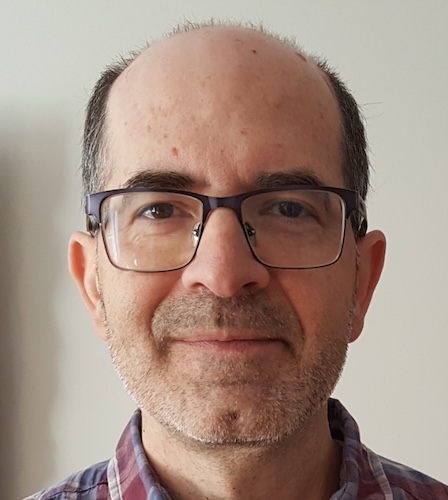
Joseph Vybihal
Game Camp Director

Milena Scaccia
AI & Robotics Camp Director / Tech Admin
Mathieu Blanchette
Medical Camp Director
Sevan Hanssian
Administrator
Mona Ghassemi
Administrator
Rae Price
Sponsor Coordinator
Sponsors
Great thanks to our sponsors for making the 2010 edition possible.